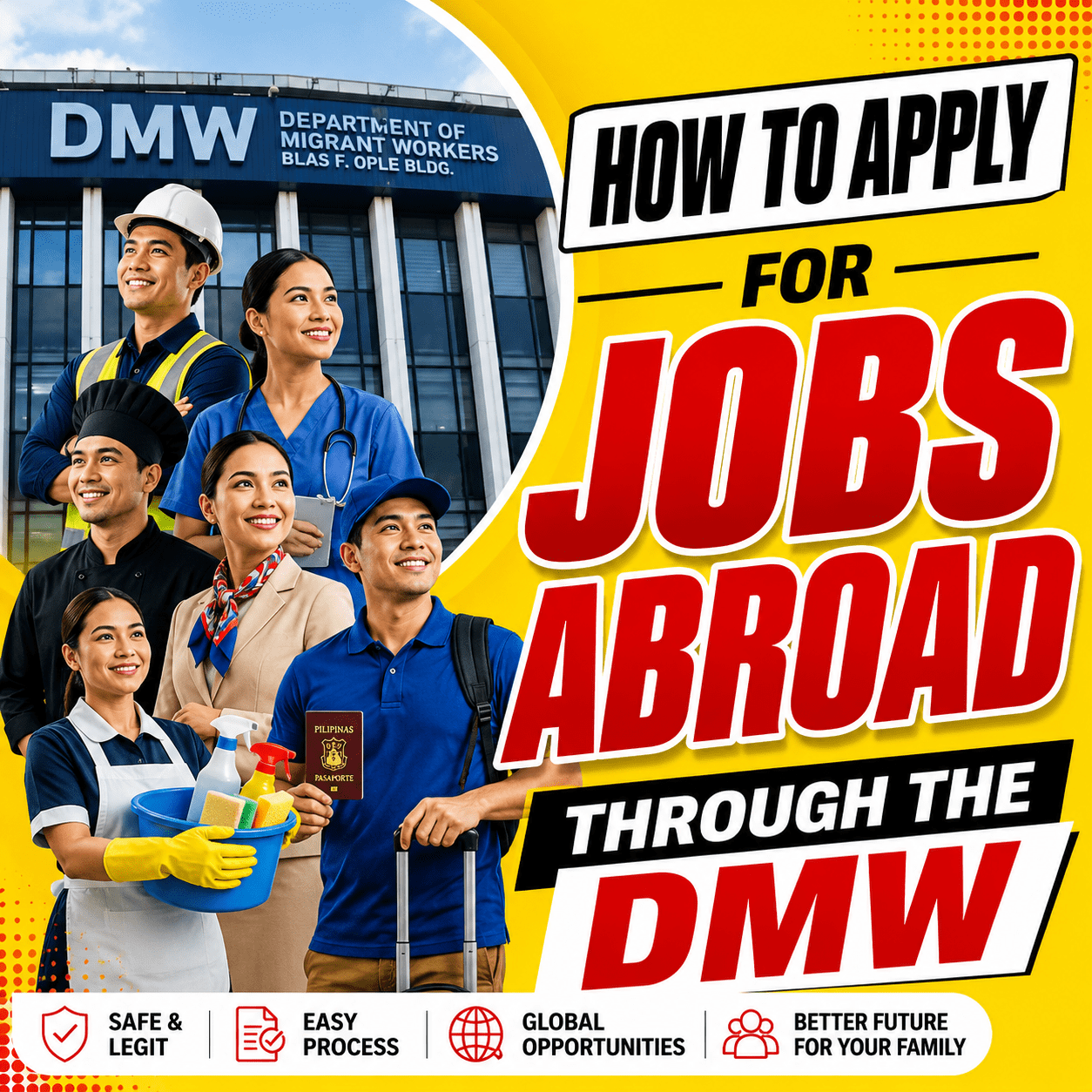
How to Apply for Jobs Abroad Through the DMW: A Complete Guide for Filipino Workers
Every year, thousands of Filipinos dream of working abroad to provide a better future for their families. Overseas jobs offer higher salaries, career growth, and opportunities to experience life in another country. However, applying for jobs overseas also comes with risks, especially when dealing with illegal recruiters and fake job offers online.
This is why the Philippine government created systems to protect Overseas Filipino Workers (OFWs). The Department of Migrant Workers (DMW) serves as the official agency responsible for ensuring that Filipino workers are legally documented, protected, and guided throughout the overseas employment process.
Whether you are applying through government-to-government hiring, a licensed recruitment agency, or a direct hire arrangement, understanding the correct process can help you avoid scams and safely achieve your dream of working abroad.
What Is the DMW?
The Department of Migrant Workers is the Philippine government agency responsible for managing and protecting Filipino migrant workers. Formerly connected to the Philippine Overseas Employment Administration (POEA), the DMW now handles overseas employment concerns, worker protection, recruitment regulation, and welfare services for OFWs.
The agency ensures that Filipino workers are properly documented before leaving the country. It also monitors recruitment agencies and verifies overseas employers to help prevent illegal recruitment and human trafficking.
Official website: DMW Official Website
Why It Is Important to Apply Through Legal Channels
Applying through legal and verified channels protects workers from exploitation, unpaid salaries, fake contracts, and unsafe working conditions. Many victims of illegal recruitment are promised high-paying jobs abroad only to discover that the jobs do not exist or that the conditions are very different from what was promised.
Using the proper DMW process gives workers several protections, including:
- Verified employment contracts
- Legal documentation
- Access to government assistance abroad
- Protection from illegal recruitment
- Easier processing at airports and immigration
- Assistance from Philippine embassies and Migrant Workers Offices (MWO)
Without proper documentation such as an Overseas Employment Certificate (OEC) or OFW Pass, workers may be considered undocumented and could face travel issues or lack protection overseas.
Step 1: Register Online Through the DMW e-Registration System
The first step for aspiring OFWs is creating an online account through the DMW e-Registration portal.
Visit: DMW Online Services Portal
This online system allows workers to create a digital profile that stores their employment information, documents, and records. The platform also simplifies future transactions with the DMW.
When registering, applicants must provide accurate personal information, including:
- Full name
- Birthdate
- Contact details
- Passport information
- Educational background
- Employment history
Make sure all information matches your official documents to avoid delays during processing.
Step 2: Complete and Update Your Profile
After registration, workers should complete their profile by uploading important documents.
Common requirements include:
- Valid passport
- Resume or curriculum vitae
- Diploma or training certificates
- Professional licenses (if applicable)
- Employment records
Your passport should be valid for at least six months before your intended departure date.
Keeping your profile updated is important because employers and agencies may review your qualifications during the hiring process.
Step 3: Find Legitimate Overseas Job Opportunities
There are several legal ways Filipinos can apply for overseas jobs.
Government-to-Government (G-to-G) Hiring
The DMW partners with foreign governments to recruit Filipino workers for approved jobs abroad. These programs are considered safer because they are directly coordinated by governments.
Examples include job opportunities in countries like:
- Japan
- Germany
- Saudi Arabia
Applicants can check official overseas openings here:
Licensed Recruitment Agencies
Workers may also apply through DMW-licensed recruitment agencies. Before applying, always verify if an agency is authorized by the government.
You can check licensed agencies through:
DMW Licensed Agencies Database
Never trust recruiters who only communicate through Facebook or messaging apps without official business records.
Direct Hire Applications
Some Filipino workers are directly hired by overseas employers without going through recruitment agencies. In these cases, the foreign employer must first secure clearance from the Migrant Workers Office (MWO) or Philippine Overseas Labor Office (POLO).
Direct hire workers must still complete DMW documentation requirements before departure.
Step 4: Contract Verification and Payment Rules
Once hired, the DMW reviews and verifies the worker’s employment contract to ensure it complies with Philippine labor standards.
The contract review helps confirm:
- Salary and benefits
- Working hours
- Job description
- Employer responsibilities
- Worker protections
For many direct hire and government-to-government programs, employers are expected to shoulder expenses such as:
- Visa processing
- Airfare
- Medical examination
- Work permits
Workers should be cautious if asked to pay excessive fees upfront.
Step 5: Secure Your OEC or OFW Pass
After completing all requirements and receiving approval, workers can obtain their Overseas Employment Certificate (OEC) or access their OFW Pass through the DMW system.
The OEC serves as an official exit clearance for OFWs departing from Philippine airports.
It also provides benefits such as:
- Exemption from travel tax
- Exemption from terminal fees
- Government documentation and protection
Information about the OFW Pass can be found here:
Basic Requirements for OFWs
Before leaving the Philippines, workers generally need the following documents:
Valid Passport
The passport should have at least six months of validity before departure.
Verified Employment Contract
The contract must be reviewed and authenticated by the DMW or MWO.
Work Visa or Entry Permit
Workers must possess the appropriate visa issued by the destination country.
Medical Certificate
Medical exams must be completed through Department of Health (DOH)-accredited clinics.
PDOS Certificate
Workers are required to attend the Pre-Departure Orientation Seminar (PDOS), which prepares OFWs for living and working abroad.
Important Reminders for Aspiring OFWs
Avoid Illegal Recruitment
Illegal recruitment remains a serious problem in the Philippines. Be cautious of recruiters who:
- Promise guaranteed jobs without interviews
- Ask for large upfront payments
- Avoid official paperwork
- Offer tourist visa arrangements for work purposes
- Recruit only through social media
If an offer sounds too good to be true, verify it first through the DMW.
No Placement Fees for Many Jobs
For government-to-government programs and many professional direct hire positions, workers should not pay placement fees.
Always ask for official receipts and verify all charges.
Use Only Official Websites
To avoid scams and fake portals, use only official government websites such as:
Final Thoughts
Working abroad can transform the lives of Filipino families, but it is important to follow legal and safe processes. The Department of Migrant Workers plays a major role in protecting OFWs by regulating recruiters, verifying contracts, and ensuring workers are properly documented before deployment.
By registering through the DMW, applying only through legal channels, and securing the proper documents such as the OEC or OFW Pass, Filipino workers can pursue overseas opportunities with greater confidence and protection.
Before accepting any overseas job offer, always verify the employer, agency, and recruitment process through official government channels. Safe migration starts with informed decisions.